


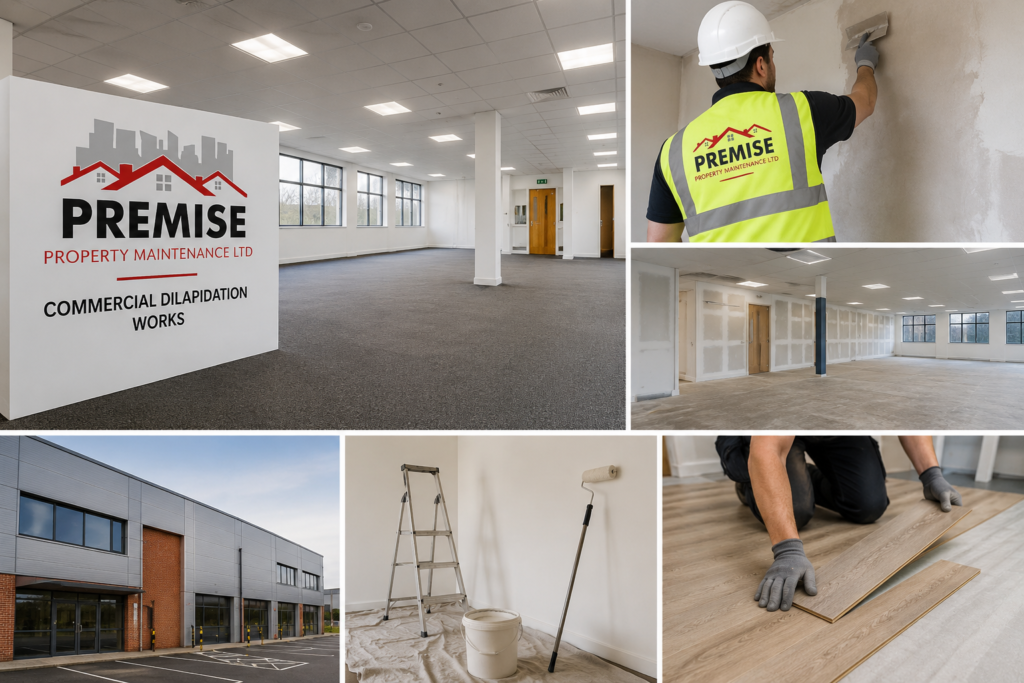
At Premise Property Maintenance, we provide reliable, high-quality commercial dilapidation works to help businesses return properties to the required standard at lease end or during refurbishment. We work with landlords, tenants, property managers, and commercial clients to deliver efficient, cost-effective solutions with minimal disruption.
Our experienced maintenance team understands the demands of commercial environments and delivers practical workmanship you can rely on, on time and to specification.
What Are Commercial Dilapidation Works?
Commercial dilapidations generally refer to repairs, maintenance and reinstatement work required when a commercial property has not been maintained or needs to be returned to an agreed condition. This is particularly common towards the end of a commercial lease, when tenants may have obligations relating to the repair and condition of the premises.
The exact work required will depend on the property, its current condition, the terms of the lease and any alterations that have been made during the tenancy. A professional approach to commercial dilapidation works can help ensure the property is dealt with efficiently and is ready for its next use.
For landlords, completing necessary dilapidation work can make a commercial property more presentable and suitable for future tenants. For outgoing tenants, addressing repairs and reinstatement requirements can help them meet their responsibilities before handing the premises back.
Common Types of Commercial Dilapidation Work
Every commercial property is different, so the work required can range from straightforward repairs to more extensive refurbishment and reinstatement. Depending on the condition and requirements of the premises, work may include:
- Internal and external repairs
- Painting and decorating
- Wall and ceiling repairs
- Flooring repairs or replacement
- Removal of tenant-installed fixtures and fittings
- Reinstatement of altered areas
- Joinery and general carpentry work
- Repairs to doors, skirting boards and other finishes
- General property maintenance
- Making good after the removal of equipment or partitions
- Preparing areas for redecoration or refurbishment
A coordinated service can make the process easier by reducing the need to arrange several different trades individually.
Dilapidation Works at the End of a Commercial Lease
The end of a lease can be a busy period for any business. Alongside relocating staff, equipment and operations, there may also be a requirement to return the premises in an appropriate condition.
Planning commercial dilapidation works early can provide more time to identify what needs attention and organise the work properly. Leaving repairs until the final days of a tenancy can create unnecessary pressure and make it more difficult to complete everything to the expected standard.
Where appropriate, work can be planned around business requirements to minimise disruption and keep the process organised. This is particularly important for offices, retail units, warehouses and other commercial environments where access and scheduling may need careful consideration.
Why Commercial Property Condition Matters
The condition of a commercial property can have a significant impact on how quickly it can be prepared for future occupation. Damaged finishes, unwanted alterations, worn flooring and poorly maintained areas can all affect the appearance and usability of the premises.
Professional commercial dilapidation works help address these issues in a structured way. Rather than focusing only on visible cosmetic problems, the work can include practical repairs and reinstatement needed to bring different areas of the property back to the required condition.
For property managers and landlords, this can help reduce delays between occupiers. For tenants, completing agreed work can support a smoother handover at the end of the lease.
Commercial Dilapidations for Different Property Types
Commercial premises vary considerably in size, layout and use. The type of property can therefore influence both the scope of work and how the project needs to be managed.
Commercial dilapidation services may be suitable for:
- Offices and business premises
- Retail units and shops
- Warehouses and industrial units
- Commercial buildings
- Workshops and storage facilities
- Landlord-managed properties
- Multi-use commercial premises
Each project should be assessed individually so that the work reflects the actual condition and requirements of the building.
Reinstating Alterations Made During a Tenancy
Businesses often make changes to commercial premises to suit their operational needs. These alterations might include new partitions, flooring, shelving, fitted furniture, signage or other installations.
At the end of a tenancy, some of these changes may need to be removed and the affected areas made good. This is where commercial dilapidation works can involve much more than basic maintenance.
Reinstatement may require several tasks to be completed in the correct order. Fixtures may need removing before walls are repaired, surfaces prepared and areas redecorated. Managing these tasks as part of a coordinated programme can help produce a cleaner and more consistent finish.
Repair and Redecoration
General wear and tear can become particularly noticeable once furniture, equipment and tenant installations have been removed. Walls may have fixing holes, surfaces can become marked and flooring may show signs of heavy use.
Repair and redecoration can therefore form an important part of commercial dilapidations. Proper preparation is particularly important because simply covering damaged areas without addressing the underlying problem may result in a poor finish.
Typical preparation and finishing work can include:
- Filling holes, cracks and damaged areas
- Preparing walls and ceilings
- Repairing damaged woodwork
- Making good around removed fixtures
- Painting walls and ceilings
- Refreshing doors, frames and skirting
- Repairing or replacing damaged finishes
The objective is to leave the relevant areas clean, presentable and completed to the required specification.
A Practical Approach to Commercial Dilapidations
Successful dilapidation work requires more than completing a list of individual repairs. Commercial projects often have deadlines, access restrictions and multiple areas requiring attention at the same time.
A planned approach helps ensure work is completed efficiently and in a sensible sequence. It also allows different maintenance tasks to be coordinated, helping to avoid unnecessary delays or repeated work.
At Premise Property Maintenance, we focus on practical solutions and dependable workmanship. By understanding the scope of the project before work begins, our team can organise the necessary repairs, maintenance and finishing work around the requirements of the property.
Minimising Disruption to Commercial Clients
Where a commercial property is still occupied, maintenance and dilapidation work needs to be managed carefully. Excessive disruption can interfere with employees, customers, deliveries and normal business operations.
Where possible, work can be organised to reduce its impact on the day-to-day use of the premises. Clear planning also helps ensure that everyone involved understands which areas are being worked on and how the project will progress.
This approach can be particularly valuable when commercial dilapidation works form part of a wider refurbishment programme or when certain areas of a property need to remain accessible.
Benefits of Professional Commercial Dilapidation Works
Using an experienced property maintenance team can provide several practical advantages, including:
- A coordinated approach to repairs and reinstatement
- Professional preparation and finishing
- Efficient management of multiple maintenance tasks
- Work completed with commercial environments in mind
- Reduced need to organise several separate trades
- Practical solutions based on the property’s requirements
- Greater focus on deadlines and agreed specifications
Having one team manage a range of maintenance requirements can also simplify communication throughout the project.
Commercial Dilapidations for Landlords
For landlords, a commercial unit may require attention after a tenant leaves before it can be marketed or occupied again. Completing repairs, removing unwanted installations and refreshing tired areas can help improve the overall presentation of the property.
Depending on the condition of the premises, this might involve targeted repairs or a broader programme of commercial dilapidation works and refurbishment.
Taking a structured approach helps landlords focus resources on the areas that genuinely need attention while preparing the property for its next stage.
Commercial Dilapidations for Tenants
Tenants approaching the end of a lease may have several responsibilities relating to the condition of the property. These can vary significantly depending on the lease and the alterations carried out during occupation.
Organising required works in advance provides an opportunity to complete repairs properly rather than rushing them close to the handover date.
Tenants should understand their individual lease obligations and seek appropriate professional advice where necessary. Once the required physical work has been identified, an experienced maintenance team can help complete repairs, reinstatement and decoration efficiently.
Quality Workmanship and Attention to Detail
The quality of the finished work matters in any commercial environment. Poor repairs or rushed decoration can leave obvious defects and may result in areas needing further attention.
Our approach to commercial dilapidation works focuses on completing each stage carefully, from preparation and repairs through to finishing. Attention to detail can make a significant difference to the overall appearance of the premises and helps provide a more professional result.
Planning Your Commercial Dilapidation Project
Good preparation can make commercial dilapidations considerably easier to manage. Before work starts, it is useful to establish the required scope, available access, deadlines and any areas that require particular attention.
Key considerations can include:
- The overall condition of the property
- Repairs identified within the premises
- Alterations requiring reinstatement
- Areas requiring decoration
- Flooring and finishing requirements
- Access to different parts of the building
- Project timescales
- Coordination with other contractors or services
Identifying these points early can help create a clearer and more efficient programme of work.
Why Choose Premise Property Maintenance?
Premise Property Maintenance provides dependable property maintenance solutions for commercial clients who need practical, professionally managed work. We understand that commercial projects often need to meet specific requirements while working within strict timescales.
Whether the property needs individual repairs, reinstatement work, redecoration or more extensive commercial dilapidation works, our aim is to provide a straightforward service focused on quality workmanship and efficient delivery.
We work with:
- Commercial tenants
- Landlords
- Property managers
- Business owners
- Commercial property clients
From smaller repair requirements to more comprehensive property works, each project is approached according to the needs and condition of the premises.
Reliable Commercial Dilapidation Works
Returning a commercial property to the required standard can involve numerous tasks, and careful coordination can make the entire process more manageable. Addressing repairs, alterations and finishing work in a planned manner can help landlords and tenants prepare the premises efficiently.
At Premise Property Maintenance, we provide reliable commercial dilapidation works designed around the practical requirements of commercial properties. With an experienced maintenance team, attention to detail and a focus on completing work to specification, we help clients restore and prepare their premises with minimal unnecessary disruption.
If your commercial property requires repairs, reinstatement, redecoration or general maintenance as part of a lease-end or refurbishment project, Premise Property Maintenance can provide a practical and professional solution.
