


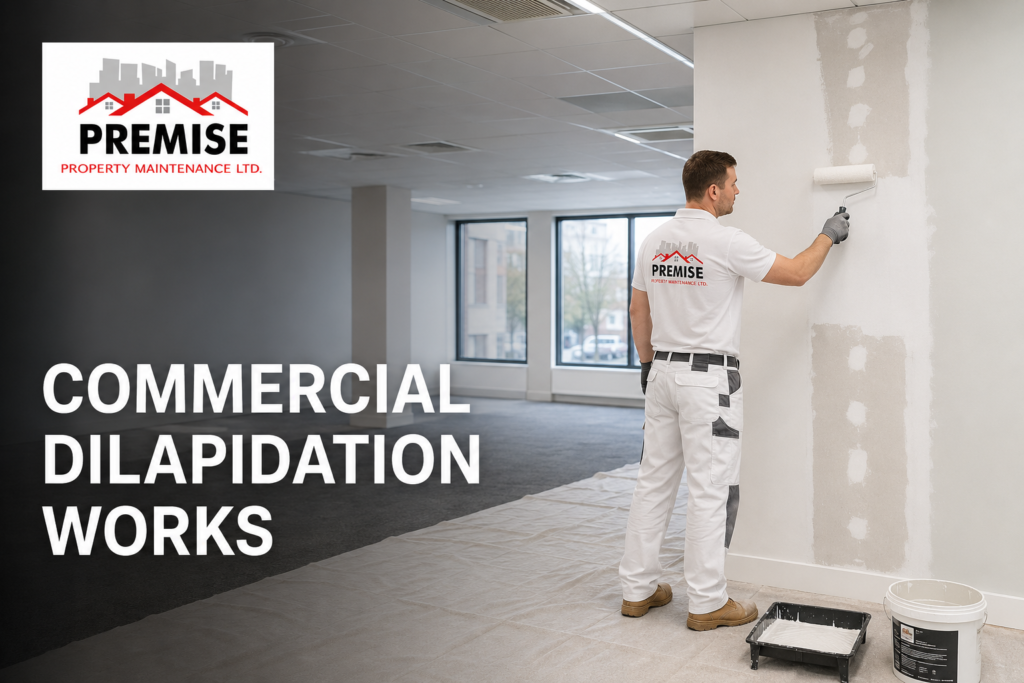
When a commercial lease approaches its end, the condition of the property can become an important concern for both the landlord and the tenant. Most commercial leases contain obligations requiring the tenant to maintain, repair and decorate the premises, as well as remove any alterations made during the tenancy.
Commercial dilapidation works help return a property to the condition required under the lease. Completing this work properly can reduce disputes, control costs and prepare the premises for its next occupant.
At Premise Property Maintenance, we provide reliable commercial dilapidation services for landlords, tenants, property managers and commercial clients. Our experienced team handles repairs, reinstatement, decorating and general refurbishment efficiently, with close attention to agreed specifications and deadlines.
What Are Commercial Dilapidations?
Commercial dilapidations relate to breaches of a tenant’s lease obligations concerning the condition, maintenance or alteration of a rented property. These issues may be identified during the lease or, more commonly, as the tenancy approaches its end.
A commercial lease may require the tenant to:
- Keep the premises in good repair
- Maintain electrical, plumbing or heating installations
- Decorate the interior and exterior at specified intervals
- Remove tenant-installed fixtures and fittings
- Reverse alterations made during occupation
- Return the original layout where required
- Clear waste, equipment and signage
- Comply with relevant statutory obligations
- Hand the property back in the condition specified by the lease
The precise responsibilities depend on the wording of the lease. Tenants and landlords should therefore obtain appropriate professional or legal advice before deciding the scope of any dilapidation work.
What Is a Schedule of Dilapidations?
A schedule of dilapidations is a document that identifies alleged breaches of the lease and the work considered necessary to correct them. It is usually prepared on behalf of the landlord by a building surveyor.
The schedule may include defective finishes, damaged fixtures, neglected maintenance, unauthorised alterations and areas requiring reinstatement. It may also set out the proposed remedial work and estimated costs.
Schedules can be issued at different stages. An interim schedule may be served during the tenancy, while a terminal schedule is generally prepared near the end of the lease. A final schedule may follow after the tenant has vacated.
Receiving a schedule does not mean work should begin without reviewing it carefully. The lease, property condition, previous alterations and supporting evidence should all be considered before the required work is agreed.
Why Should Dilapidation Works Be Planned Early?
Leaving commercial dilapidations until the final weeks of a tenancy can create unnecessary pressure. Materials must be ordered, contractors coordinated and potentially disruptive work completed before the handover deadline.
An early assessment gives the tenant time to understand the likely obligations, seek advice and compare the cost of completing the work against any proposed financial settlement.
Planning early can also help to:
- Identify hidden defects before they become more expensive
- Establish a practical programme of work
- Coordinate several trades efficiently
- Avoid delays at lease end
- Reduce disruption to ongoing business operations
- Allow sufficient time for inspections and final corrections
- Prevent rushed or incomplete repairs
- Provide greater control over expenditure
Landlords also benefit from early planning because the property can be prepared for marketing, refurbishment or occupation by a new tenant with less delay.
Common Commercial Dilapidation Works
The work required varies according to the lease, the original condition of the property and any changes made by the tenant.
Repairs and Making Good
Commercial premises experience considerable wear through daily use. Walls, ceilings, doors, floors, windows and fittings may require repair before the property is returned.
Making-good work can include filling holes, repairing damaged plaster, replacing broken tiles, fixing doors, renewing damaged woodwork and addressing defects caused by removed equipment.
Reinstatement of Alterations
Tenants often adapt premises to suit their operations. Offices may be divided with partitions, retail units may receive display installations, and industrial properties may be fitted with specialist equipment.
At lease end, the tenant may be required to remove these additions and restore the original layout. Reinstatement can involve:
- Removing partition walls
- Taking out counters, shelving and storage systems
- Removing data cabling and redundant electrical fittings
- Dismantling specialist equipment
- Closing openings created for services
- Restoring suspended ceilings
- Replacing damaged floor finishes
- Making good walls following fixture removal
The landlord’s requirements should be confirmed before alterations are removed, as some additions may be retained by agreement.
Painting and Decorating
Many commercial leases contain redecoration obligations. Walls, ceilings, doors, skirting boards and other surfaces may need to be repainted to an agreed standard or colour scheme.
Preparation is essential for a professional finish. Surfaces may require cleaning, filling, sanding and priming before new coatings are applied. Simply painting over damaged or poorly prepared surfaces is unlikely to provide an acceptable result.
Flooring Repairs and Replacement
Carpets, vinyl, tiles and other commercial floor finishes can become stained, torn or damaged through prolonged use. Dilapidation work may include cleaning, repairing or completely replacing the flooring.
When partitions or fixed furniture are removed, different floor finishes or uncovered sections may also need to be addressed to create a consistent appearance.
Electrical, Plumbing and Heating Work
Redundant electrical installations may need to be removed safely, while damaged sockets, lighting and switches may require repair or replacement. Plumbing alterations, leaking fittings and defective sanitary facilities may also need attention.
Heating and ventilation systems should be inspected where the lease places maintenance responsibilities on the tenant. Specialist work must always be completed by appropriately qualified professionals.
External Repairs
Depending on the lease, dilapidation obligations may extend to external elements such as doors, windows, gutters, signage, render, fences or service yards.
External signs and branding usually need to be removed, with fixing holes and affected surfaces made good. Clearing vegetation, waste and unwanted equipment may also form part of the handover requirements.
Dilapidations for Different Commercial Properties
Commercial dilapidation services may be required across many types of premises, including:
- Offices and business centres
- Retail shops and showrooms
- Warehouses and industrial units
- Restaurants, cafés and hospitality venues
- Healthcare and professional premises
- Schools and training facilities
- Workshops and storage buildings
- Mixed-use commercial properties
Each building presents different challenges. An office may require partition removal and redecoration, while a warehouse might need repairs to floors, loading areas and industrial fittings. The programme should reflect the property’s use and the agreed handover standard.
Managing Dilapidation Costs
Commercial dilapidation costs can vary significantly. The final amount depends on the size and condition of the property, the extent of reinstatement, the lease requirements, material choices and the time available.
A detailed inspection and clearly defined specification can reduce uncertainty. It also allows contractors to price the same scope of work, making quotations easier to compare.
Using one commercial property maintenance provider to coordinate several trades can improve efficiency. Decorating, plumbing, electrical work, flooring and general repairs can be scheduled in the correct sequence, reducing delays and repeated call-outs.
However, tenants should avoid completing unnecessary work before confirming their obligations. The lease and schedule of dilapidations should be reviewed by suitably qualified advisers where appropriate.
Completing the Final Handover
Before the premises are returned, a final inspection should be carried out against the agreed work schedule. This allows unfinished items, defects or cleaning requirements to be addressed before the handover date.
The property should generally be cleared of unwanted furniture, stock, rubbish and tenant equipment. Keys, access devices and relevant maintenance documents should also be prepared for return.
Photographic records can provide useful evidence of the property’s condition once the work has been completed. Any certificates or reports associated with specialist services should be retained.
Professional Commercial Dilapidation Services
Commercial dilapidation works require careful planning, dependable workmanship and effective coordination. Whether a property needs minor repairs and decoration or extensive reinstatement following a long tenancy, the work should be completed accurately and within the required timeframe.
Premise Property Maintenance works with landlords, tenants, property managers and commercial clients to deliver reliable, cost-effective dilapidation solutions. Our team can manage repairs, reinstatement, decorating, electrical work, plumbing, heating and general property maintenance under one roof.
Contact Premise Property Maintenance today to discuss your commercial dilapidation requirements and arrange an assessment of the premises.
